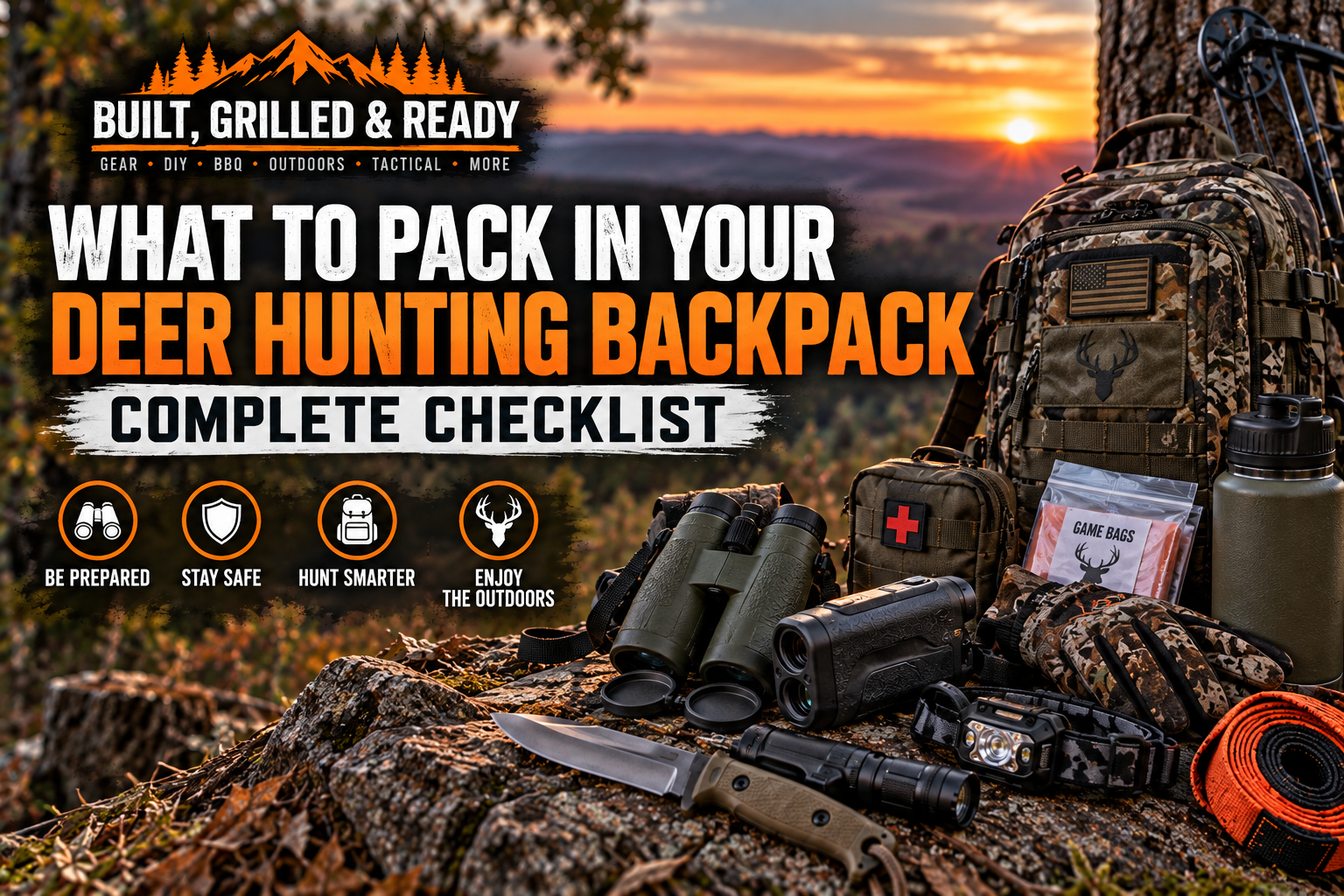
Packing for a deer hunt is a balancing act.
Bring too little and the one thing you left at home will probably be exactly what you need.
Bring too much and you’ll spend the morning carrying a heavy backpack full of gear you never touch.
The goal isn’t to pack everything you own. It’s to carry enough equipment to keep you safe, comfortable, organized and prepared for the type of hunt you’re actually doing.
A hunter walking deep into public land needs a different setup from someone hunting a private-property box blind a few hundred yards from the truck.
But there are certain items that make sense in almost every deer hunting backpack.
Here’s a practical deer hunting backpack checklist you can customize for your own hunts.
Affiliate Disclosure: As an Amazon Associate I earn from qualifying purchases. This post contains affiliate links, which means I may earn a commission if you purchase through one of my links, at no additional cost to you.
Quick Deer Hunting Backpack Checklist
If you just want the short version, start here:
- Binoculars
- Rangefinder
- Headlamp
- Backup flashlight
- Hunting knife
- Wind indicator
- Water
- Snacks
- Phone
- Portable power bank
- Charging cable
- Extra batteries
- Basic first-aid kit
- Emergency supplies
- Appropriate extra clothing
- Gloves
- Hand warmers when needed
- Field-dressing gloves
- Deer drag or hauling strap
- Game bags when appropriate
- Required licenses and documentation
Then add or remove equipment based on where, when and how you hunt.
If you’re still building your overall hunting setup, see our guide:
15 Essential Deer Hunting Gear Items You’ll Actually Use

1. Binoculars
Binoculars belong near the top of the list because they’re useful throughout the hunt.
They allow you to examine deer, check distant movement and get a better look at something without immediately reaching for another piece of equipment.
For whitetail hunting, 8×42 and 10×42 binoculars are common choices because they offer useful magnification while remaining reasonably portable.
Where should you carry them?
If you use binoculars frequently, a chest harness may make more sense than putting them inside your backpack.
Otherwise, keep them in an easily accessible compartment rather than burying them underneath extra clothing.
2. Rangefinder
A rangefinder is another item that should be easy to reach.
You don’t want to dig through your entire pack when a deer appears.
Before the hunt settles down, range several obvious landmarks around your setup.
That might include:
- A large oak tree
- Edge of a shooting lane
- Fence corner
- Feeder
- Trail crossing
- Opposite edge of a field
Now you have known reference distances before an animal enters the area.
3. Headlamp
If you’re entering before sunrise or leaving after sunset, a headlamp is essential.
It keeps both hands available while you’re walking, carrying equipment, opening gates or handling other tasks.
Look for a model with several brightness settings and good battery life.
A red-light mode can also be useful when you need limited illumination without flooding the area with bright white light.
4. Backup Flashlight
Yes, even if you already have a headlamp.
Two lights may seem redundant until your primary light quits working while you’re trying to leave the woods.
A compact flashlight doesn’t weigh much and gives you an independent backup.
Don’t rely exclusively on your phone’s flashlight.
Save your phone battery for navigation and communication.
5. Hunting Knife
A dependable hunting knife should have a permanent place in your backpack during deer season.
A manageable fixed-blade knife or quality replaceable-blade system can handle field-dressing tasks without taking up much space.
Keep it protected in a sheath or case.
If you’re using replaceable blades, carry a few appropriate replacement blades in a secure container.

6. Wind Indicator
Wind matters throughout the hunt—not just when you park the truck.
A small bottle of wind-indicator powder or another lightweight indicator takes up almost no room.
Check the wind periodically.
Terrain, vegetation and changing temperatures can create air currents that don’t necessarily match the general wind direction.
7. Water
This one sounds obvious, but it’s easy to underestimate how much water you’ll want during a long hunt.
Carry enough for the expected duration, temperature and physical activity involved.
A short morning hunt close to your vehicle is very different from hiking several miles and staying out most of the day.
Reusable bottles, insulated bottles and hydration reservoirs can all work.
Choose what fits your hunting style.
8. Snacks
Keep it simple.
Choose food that’s easy to carry, doesn’t require preparation and isn’t packaged in excessively noisy wrappers.
Good options can include:
- Protein bars
- Jerky
- Trail mix
- Nuts
- Crackers
- Other compact snacks
For an all-day hunt, bring enough food to keep yourself comfortable without filling half your backpack with groceries.
9. Portable Power Bank
Your phone may serve as your map, camera, weather source and primary communication device.
That makes battery life important.
A compact power bank and short charging cable provide inexpensive insurance during long hunts.
Keep both together.
A fully charged power bank isn’t very useful if the charging cable is sitting in your truck.
10. Extra Batteries
Think about every battery-powered item you’re carrying.
That might include:
- Headlamp
- Flashlight
- Rangefinder
- Other electronics
If they use replaceable batteries, carry a small backup set.
Store loose batteries properly so their terminals can’t contact metal objects or each other in a way that could cause a short circuit.
A small battery case works well.

11. Basic First-Aid Kit
A small first-aid kit belongs in your hunting pack.
You’re dealing with knives, branches, uneven terrain and potentially long distances from immediate help.
You don’t need to carry an entire medical cabinet, but a basic kit can cover common minor injuries.
Consider items such as:
- Adhesive bandages
- Gauze
- Medical tape
- Antiseptic wipes
- Blister care
- Tweezers
- Personal medications you may require
For remote hunting, your emergency preparation should reflect the terrain, distance from help, weather and your level of training.
12. Emergency Supplies
This category depends heavily on where you’re hunting.
Someone sitting in a box blind behind the house doesn’t need the same emergency kit as someone hunting miles from a road.
For more remote hunts, consider equipment appropriate to your environment, such as:
- Emergency blanket
- Fire-starting equipment where appropriate and lawful
- Whistle
- Small amount of cordage
- Rain protection
- Navigation backup
Don’t carry survival equipment simply because it looks impressive.
Carry equipment you understand how to use.
13. Extra Clothing
Weather can change quickly, and sitting still makes cold temperatures feel much different than they did during the walk in.
Depending on the forecast, you might pack:
- Lightweight insulating layer
- Rain shell
- Beanie
- Neck gaiter
- Extra gloves
Layering allows you to add or remove clothing as conditions change.
Don’t overdress for the walk in.
If you sweat heavily on the way to your stand and then sit still, that moisture can make you considerably colder.
When practical, carry an outer layer in your backpack and put it on after you arrive.
14. Hunting Gloves
A lightweight pair of gloves can provide warmth without sacrificing too much dexterity.
For colder conditions, you can combine lighter gloves with a hand muff or heavier insulated option.
Whatever you choose, make sure you can safely operate the equipment you need to use while wearing them.
15. Hand Warmers
For cold-weather hunting, disposable or rechargeable hand warmers can make a long sit much more comfortable.
They take up little room and can be especially useful when you’re trying to avoid constantly moving your hands around to stay warm.
Keep a couple in the pack during colder parts of the season.
16. Field-Dressing Gloves
Disposable gloves weigh almost nothing and make field dressing considerably cleaner.
Pack several pairs in a small resealable bag.
They’re inexpensive, compact and useful enough that there’s little reason not to carry them.

17. Deer Drag or Hauling Strap
Don’t wait until you have a deer down to start thinking about recovery.
A compact deer drag or hauling strap can make moving an animal considerably easier.
The right recovery setup depends on terrain, distance and available equipment, but a simple strap takes up very little backpack space.
18. Game Bags
Game bags become more important when you’re processing or transporting meat in the field rather than moving the animal intact.
They help protect meat while allowing it to cool appropriately.
Whether you need them on every hunt depends on your recovery plan.
For short private-land hunts with vehicle access, they may stay in the truck.
For more remote hunts, they can deserve a place in your backpack.
19. Phone
Most hunters already have one, but treat your phone as part of your equipment.
Before leaving:
- Charge it fully
- Download any maps you may need offline
- Check the forecast
- Make sure someone knows where you’ll be when appropriate
Cellular coverage isn’t guaranteed in hunting areas, so don’t assume your phone replaces every other navigation or emergency tool.
Conserve the battery when you’re away from a charger for extended periods.
20. Licenses and Required Documentation
This one shouldn’t be an afterthought.
Before hunting, verify that you have the licenses, endorsements, tags, permits or other documentation required for the location and method you’re hunting.
Requirements vary by jurisdiction and can change.
Check the current regulations issued by the appropriate wildlife agency rather than relying on what was required last season.
What I Would Keep in the Main Compartment
The main compartment is best for larger items you don’t need constantly.
For example:
- Extra clothing
- Rain gear
- Food
- Larger first-aid supplies
- Game bags
- Seat cushion if it fits
Keep frequently used items somewhere easier to reach.
What I Would Keep in Easy-Reach Pockets
These are the things you don’t want buried at the bottom of your pack:
- Rangefinder
- Headlamp
- Flashlight
- Wind indicator
- Knife
- Gloves
- Snacks
- Power bank
- Charging cable
Your exact organization doesn’t matter nearly as much as consistency.
If your headlamp always goes in the same pocket, you’ll know exactly where it is when you’re standing in the dark.
What Can Stay in the Truck?
Not everything needs to travel into the woods with you.
Depending on your hunting situation, the truck can hold larger backup equipment such as:
- Additional water
- Extra clothing
- Spare boots
- Larger recovery equipment
- Cleaning supplies
- Additional food
- Tool kit
- Spare batteries
- Larger first-aid or emergency kit
For hunts close to the vehicle, this lets you keep the backpack considerably lighter.
For remote hunts, obviously, you’ll need to be more self-sufficient.
Don’t Forget Your Tree-Stand Safety Equipment
If you’re hunting from an elevated tree stand, your properly fitted full-body safety harness and appropriate fall-arrest equipment are essential.
Use the equipment according to the stand and harness manufacturers’ instructions, including during climbing when the system is designed for that use.
Inspect your safety equipment before the season and periodically throughout it.
Don’t bury essential safety equipment underneath optional hunting accessories.
How Heavy Should Your Deer Hunting Backpack Be?
There’s no universal ideal weight.
Your pack should be heavy enough to carry what your particular hunt requires without being loaded with unnecessary equipment.
A short private-land hunt may require very little.
A remote all-day hunt may require substantially more food, water, clothing and emergency equipment.
Instead of chasing a specific number, evaluate every item:
Will I realistically use this?
Does it solve an important problem?
Would I regret not having it if something goes wrong?
If the answer to all three is no, it may not need to be in the pack.
Pack for the Hunt You’re Actually Taking
One of the easiest mistakes is packing for every possible hunting situation instead of today’s hunt.
Check:
- Weather
- Temperature
- Hunt duration
- Walking distance
- Terrain
- Distance from your vehicle
- Expected recovery method
Then adjust the backpack.
A 40-degree morning in a nearby box blind doesn’t require the same loadout as an all-day hunt in freezing weather miles from the truck.
Do a Backpack Check Before Deer Season
A week or two before your first hunt, empty the entire backpack.
Don’t assume last season’s equipment is ready.
Check:
Lights
Test them and inspect the batteries.
Rangefinder
Verify that it works and replace the battery if needed.
Knife
Sharpen the blade or check your replacement blades.
Power Bank
Fully charge it.
First-Aid Kit
Replace anything used, damaged or expired.
Clothing
Make sure it still fits and is appropriate for expected conditions.
Recovery Gear
Inspect straps, game bags and other equipment.
Backpack
Check zippers, buckles, straps and seams.
Then repack everything intentionally.
Opening morning is not the time to discover that your headlamp still contains dead batteries from last season.
My Simple Deer Hunting Backpack Setup
For a typical deer hunt where I’m not traveling far from the vehicle, I’d keep the setup relatively simple:
Optics
Binoculars and rangefinder.
Lighting
Headlamp plus backup flashlight.
Field Gear
Knife, wind indicator, field-dressing gloves and deer drag.
Electronics
Phone, power bank, charging cable and necessary spare batteries.
Comfort
Water, snacks, gloves and weather-appropriate extra clothing.
Safety
Basic first-aid and emergency equipment appropriate to the hunt.
Then I’d add specialized gear only when the location, weather or hunting method calls for it.
That’s enough equipment to handle a lot of deer hunts without turning the backpack into a 30-pound junk drawer.
Start With the Essentials
The best hunting backpack isn’t necessarily the one carrying the most gear.
It’s the one where everything has a reason for being there.
Start with your safety equipment and true essentials.
Add the items that make you more comfortable and prepared.
Then eliminate the stuff you repeatedly carry but never use.
After a season or two, your backpack will become personalized around the way you actually hunt.
And that’s exactly what you want.
Build the Rest of Your Deer Hunting Setup
If you’re preparing for deer season, read our complete guide:
15 Essential Deer Hunting Gear Items You’ll Actually Use
It covers optics, clothing, trail cameras, recovery equipment and other practical gear worth considering before opening morning.
Built. Grilled. Ready.
Pack smarter. Hunt prepared. Enjoy more time outdoors.
Leave a Reply